
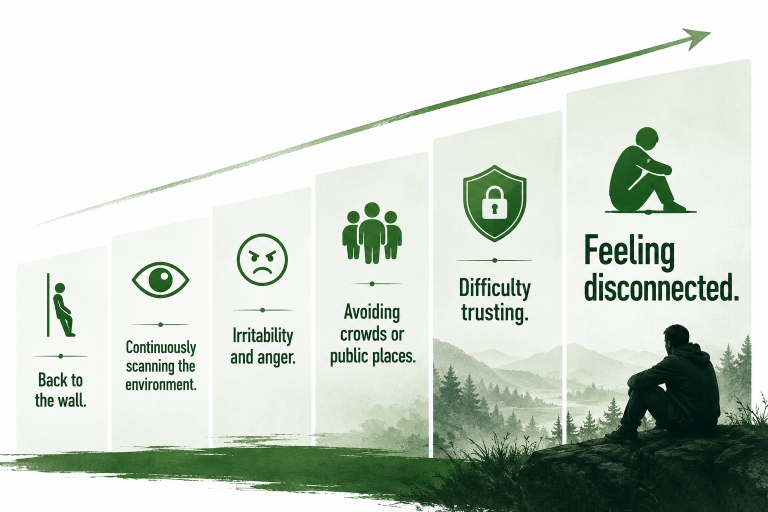
Whether you are a police officer, a firefighter, or a paramedic, you have been trained to scan the environment for danger. The challenge is staying stuck in hypervigilance after your shift is over. If you feel unsafe when nothing is wrong, you may have PTSD. If you are a first responder, work with first responders, or are supporting a first responder at home, then this blog is for you.
Why Do First Responders Struggle to Ask for Help?
First responders struggle to ask for help because of the stigma surrounding mental health issues. Many first responders know that mental health challenges are often inadequately supported in the various services. Thoughts like “If they knew that I was having a mental health challenge, they wouldn’t respect me” are common.
What Are the Signs That Trauma Is Affecting Your Life Outside of Work?
If you are doing any of the following, trauma may be impacting your life outside of work:
- Bringing your work home with you and being unable to disconnect from the job.
- Drinking or using substances to soothe or calm yourself.
- Feeling irritable or angry.
- Feeling disconnected from your spouse, family, or friends.
- Feeling like you must be on guard in every situation, also known as hypervigilance.
- Having sleep problems and/or an inability to relax.
Why Do I Feel Numb, Angry, or Disconnected?
Your nervous system is tired from working overtime. You have seen too much on the job. Your experiences of life and death, serious injury, and human suffering required you to suppress your emotions. Now you feel numb and can’t feel much of anything.
Disconnection happens because you believe that family and friends don’t understand your experiences. When you feel disconnected, you don’t talk to others because you don’t want to be a burden. Anger can be protective, but underneath there are feelings of fear, grief, helplessness, and more.
Is This PTSD or Stress? How Do You Tell the Difference?
PTSD is different from work-related stress.
Symptoms of PTSD in First Responders
- Re-experiencing the traumatic event through intrusive thoughts, flashbacks, and nightmares.
- Avoidance of thoughts and feelings related to the trauma, including avoiding people, places, or things that are reminders of what happened.
- Changes in thought or mood, including feeling on edge, detached from others, guilt, and self-blame.
- Hypervigilance – being on high alert when there is no obvious reason to be.
- Irritability and difficulty concentrating.
- Symptoms are usually connected to a specific incident or period of service.
Symptoms of Work-Related Stress
- Emotional: Irritability, numbness, overwhelm, hopelessness, and mood swings.
- Physical: Fatigue, problems sleeping, headaches, digestive issues, low energy, or frequent illness.
- Cognitive: Challenges with concentration, memory, decision making, and worry.
If these stress symptoms persist, you may be experiencing PTSD, compassion fatigue, burnout, or moral injury.
Am I Suffering from Moral Injury?
First responders can suffer from moral injury when they encounter situations that challenge beliefs about fairness, responsibility, justice, or humanity. The result is that an individual can question themselves or others. They may believe that they should have done more or somehow failed to help. They may also think that the system failed someone, or they were a witness to cruelty or neglectful behaviour.
The overwhelming feelings of someone suffering from moral injury are guilt, shame, and betrayal, while PTSD focuses on fear and danger.
What Does Trauma Therapy Look Like for a First Responder?
Trauma therapy will look different depending on the type of therapy used by the therapist. Initially the session will focus on getting to know you and your challenges. There will be a discussion about the options available for treatment, which will vary depending on the therapist. Eventually you will need to think and talk about what happened. The extent to which you talk about the trauma depends on the treatment.
Will Therapy Make My Trauma Worse?
Therapy will not make your trauma worse, however, it may feel that way. To work through your trauma, you will need to think and talk about it. This will stir up feelings that you have worked hard to suppress or ignore. So initially it may feel like things are getting worse, but that is not the case.
Therapy that is done too quickly or inappropriately can make things worse, as can therapy provided by someone who is not trained in trauma. Choosing a therapist with specific trauma training is essential.
How Can I Support My First Responder Spouse or Partner?
- Supporting a spouse is very challenging. Listed below are some ideas to help:
- Listen if they will talk. Understand that if they don’t talk, they are likely wanting to protect you from their occupational trauma.
- Don’t push them to talk. Offer support without pressure.
- Read about trauma for first responders to understand the symptoms of stress, moral injury, or PTSD.
- Understand that mood changes likely have nothing to do with you. This is hard because their distance can make you feel like you did something wrong.
- Don’t become their therapist. Encourage them to seek support.
- Don’t forget to take care of yourself as well. Supporting a first responder can be stressful.
Working with a Trauma Therapist Who Understands First Responders.
If you recognised yourself in this blog – the hypervigilance, the numbness, the anger you can’t explain, the disconnection from the people you love — please know that what you’re experiencing has a name, and it has a treatment.
Annette Poechman is a Registered Psychotherapist and Certified EMDR Therapist based in Hamilton, Ontario, with over 25 years of experience supporting individuals living with PTSD, CPTSD, and trauma. She is currently accepting new clients.
You don’t have to keep holding it together on your own. Reach out to book a free 15-minute consultation and take the first step toward feeling like yourself again.
Listening. Guiding. Caring.